
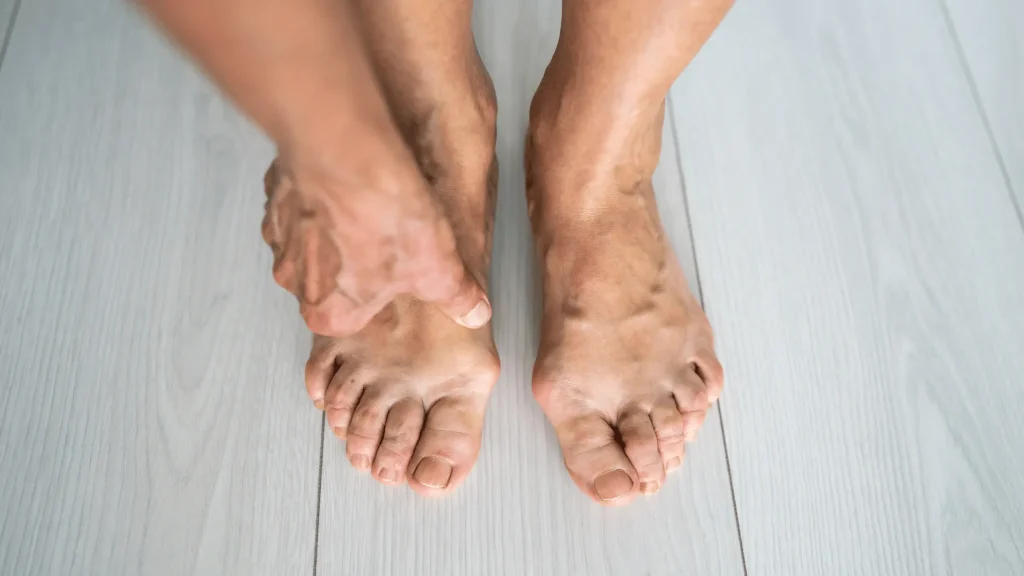
A bunion may start as a small bump along the side of the big toe, but it can become harder to ignore when shoes begin to rub, walking becomes uncomfortable, or pain starts limiting your usual activities. The bony bump develops as the bones around the big toe joint move out of alignment.
Bunion treatment depends on your pain, toe alignment, foot structure, activity level, footwear, and how much the problem affects daily function. Many patients manage symptoms without surgery, while persistent pain or difficulty walking may warrant further evaluation.
What Is a Bunion?
A bunion is a bony prominence that develops gradually at the base of the big toe. The medical term for the deformity is hallux valgus.
The big toe connects to the first metatarsal bone at the metatarsophalangeal, or MTP joint. When a bunion forms, the first metatarsal shifts inward while the big toe angles toward the second toe, making the MTP joint more prominent along the inner side of the foot.
As this alignment changes, the joint becomes more exposed to pressure from shoes and from the way weight moves through the foot. Repeated rubbing can irritate the skin and soft tissue over the bump, while altered foot mechanics may place additional stress across the forefoot.
What Are the Most Common Bunion Symptoms?
Some people notice a change in toe alignment before they experience much discomfort, while others first become aware of the problem when shoes begin pressing against the big toe joint or the area becomes sore after walking.
Common bunion symptoms include:
- A visible bony bump at the base of the big toe
- Pain or tenderness around the big toe joint
- Redness or swelling where a shoe rubs against the bump
- Stiffness or reduced movement in the big toe
- Corns, calluses, or thickened skin caused by friction
- Crowding between the big toe and other toes
- Difficulty walking comfortably or wearing certain shoes
As the bunion progresses, the big toe may move farther toward the second toe, increasing crowding and sometimes causing the toes to overlap.
A tailor’s bunion, or bunionette, develops near the base of the little toe rather than the big toe. It can cause similar irritation when shoes place pressure against the outside of the foot.
Why Do Bunions Develop?
Foot structure is usually the main reason bunions develop, however, some people inherit a foot shape or mechanics that make the big toe joint more likely to move out of alignment, which is why family history is common among people with bunions.
Flat feet, low arches, loose joints, and other structural differences may also change how weight moves through the foot. Over time, those mechanics can place more stress around the first metatarsal bone and big toe joint.
Footwear can add to that pressure. Narrow or pointed shoes compress the toes, while high heels shift more body weight toward the forefoot. Wearing tight shoes is not always the cause of a bunion, but it can aggravate an existing deformity and make symptoms worse.
Inflammatory conditions such as rheumatoid arthritis may also contribute to changes in joint alignment. Although bunions often become noticeable in adulthood, they can also develop during adolescence.
Because inherited foot structure may be involved, it’s not always possible to prevent bunions. Comfortable, well-fitting shoes with a wide toe box can reduce unnecessary pressure around the big toe and make symptoms easier to manage.
What Does Bunion Treatment Look Like Without Surgery?
Non-surgical bunion treatment focuses on reducing the pressure and irritation that make the joint painful. These approaches do not permanently move the bones back into normal alignment, but they may make walking, standing, and wearing shoes more comfortable.
Treatment options may include:
- Footwear changes: Well fitting shoes with a wide toe box give the toes more room and reduce pressure over the bump.
- Bunion pads: Bunion pads cushion the prominent area and protect it from direct shoe pressure.
- Shoe inserts or orthotic devices: Orthotics can redistribute weight, support the foot, and improve foot mechanics.
- Toe spacers or splints: These may relieve pressure or hold the big toe in a more comfortable position, but they do not permanently correct the deformity.
- Ice: An ice pack may reduce swelling and discomfort after activity.
- Medication: Nonsteroidal anti inflammatory drugs such as ibuprofen or naproxen may reduce pain and inflammation when medically appropriate.
When changes in strength, mobility, or walking mechanics contribute to discomfort, physical therapy may also be considered as part of treatment.
When Should You See a Foot and Ankle Specialist for a Bunion?
A bunion evaluation is recommended when symptoms begin affecting walking, standing, work, exercise, or footwear.
See a foot and ankle specialist if:
- Pain keeps returning despite footwear changes
- Walking or standing for longer periods has become difficult
- You avoid activities because of big toe joint pain
- Finding comfortable shoes is becoming difficult
- Swelling or irritation keeps returning
- The big toe is moving noticeably toward the other toes
- Stiffness makes it harder to push off the foot while walking
During a physical exam, the specialist looks at toe alignment, MTP joint movement, tenderness, skin irritation, and overall foot structure. Weight-bearing X-rays can then show how far the bones have shifted, whether arthritis is present, and how the joint is positioned while you are standing.=
For patients seeking an orthopedic foot specialist in Connecticut, this evaluation can clarify whether the pain is coming primarily from shoe pressure, joint irritation, changes in alignment, or a combination of factors.
When Does Bunion Treatment Include Surgery?
Bunion surgery may be considered when ongoing pain or difficulty walking continues despite appropriate conservative care. The decision is based on symptoms and function rather than appearance alone.
Surgery generally corrects alignment around the big toe joint rather than simply removing the bony bump. Depending on the deformity, the orthopaedic surgeon may reposition the metatarsal bone through an osteotomy and balance the surrounding ligaments and soft tissues. Other procedures may be considered when arthritis or a more complex deformity affects the joint.
Open and minimally invasive surgical techniques are both used for bunion correction. Minimally invasive procedures use smaller incisions, but they are not appropriate for every foot. X-rays, the physical exam, joint condition, and degree of deformity all influence the surgical approach.
Bunion surgery is the recommended treatment when persistent pain continues to limit everyday activities despite changes in footwear and other non-surgical treatments.
What Is Bunion Surgery Recovery Like?
Bunion surgery recovery varies based on the procedure performed and the amount of correction required. Early recovery may involve a surgical shoe, boot, brace, crutches, or limits on how much weight you place on the foot. Your surgeon will monitor the position of the bones as they heal.
Full recovery from bunion surgery may take up to six months, although swelling may persist longer. Your return to regular shoes, work, driving, exercise, and longer periods of walking will depend on the procedure and your recovery progress.
Where Can You Have a Painful Bunion Evaluated in Connecticut?
If a bunion is affecting the shoes you wear, how far you walk, or which activities you avoid, an evaluation can determine which treatment options are appropriate.
Valley Orthopaedic Specialists provides foot and ankle care for patients in Shelton, Oxford, Fairfield, and surrounding Connecticut communities. Our orthopaedic providers include Gary R. Richo, M.D., Ph.D., a board-certified orthopaedic surgeon with fellowship training in foot and ankle surgery and reconstructive surgery of the foot.
To have ongoing bunion pain or big toe joint pain evaluated, contact Valley Orthopaedic Specialists to schedule an appointment.