
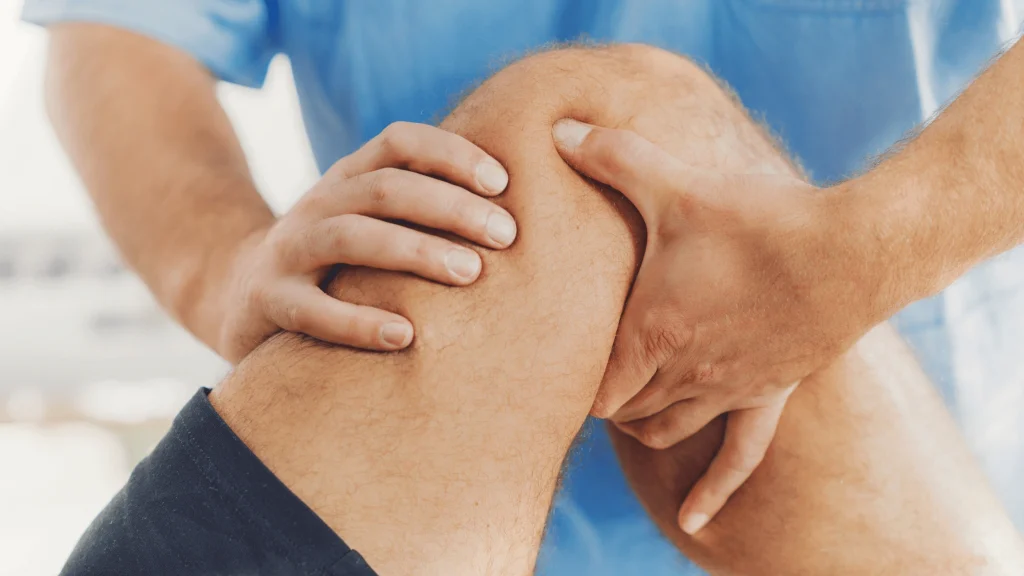
Your knee swelled after a hard pivot. Your shoulder hurts every time you serve or throw. An ankle sprain that seemed minor still makes running difficult two weeks later. These are the types of problems a sports medicine doctor evaluates and treats.
Sports medicine isn’t limited to professional athletes or major injuries. It covers sudden injuries, pain caused by repetitive motion, and conditions that keep student athletes, competitive athletes, active adults, and weekend warriors from moving comfortably. At Valley Orthopaedic Specialists, our sports medicine physicians identify the injury, explain the treatment options, and plan a safe return to activity.
What Is a Sports Medicine Doctor?
A sports medicine doctor specializes in injuries and conditions involving the musculoskeletal system, including the bones, joints, muscles, tendons, ligaments, and other soft tissues responsible for movement.
Sports medicine doctors come from different medical backgrounds. Some practice primary care sports medicine and focus on non-surgical care. Others are orthopedic surgeons with extensive training in treating sports-related injuries, including surgical treatment when necessary.
Sports medicine specialists are often board-certified orthopaedic surgeons or physicians who have completed additional fellowship training in sports medicine. They work with athletes of all levels and active patients using non-surgical and surgical options based on the injury.
Their work involves more than locating the painful area. A sports medicine physician considers how the injury happened, which movements reproduce the symptoms, and what the patient wants to resume. The physical demands placed on the knee joint differ for a soccer player, runner, golfer, warehouse employee, and active older adult. Those differences influence the treatment plan.
What Sports Injuries Does a Sports Medicine Doctor Treat?
Sports medicine physicians diagnose acute injuries caused by a fall, collision, twist, or sudden force. They also treat conditions that develop when repetitive motion places continued stress on a joint, muscle, or tendon.
Common sports injuries include:
- Knee injuries, including ligament sprains, meniscus tears, patellar dislocations, tendon injuries, and activity-related knee pain
- Shoulder injuries, including rotator cuff tears, impingement, labral tears, and dislocations
- Ankle sprains, fractures, stress fractures, and Achilles tendon injuries
- Muscle strains and tendon injuries
- Elbow conditions associated with throwing, racquet sports, golf, or repetitive motion
- Hand and wrist sprains or fractures
- Joint pain related to cartilage damage or arthritis
Sports-related injuries may produce similar symptoms even when they involve different structures. Knee pain after a twisting injury could involve a ligament, meniscus, kneecap, or bone. Shoulder pain during overhead movement could come from the rotator cuff, labrum, biceps tendon, or tissue surrounding the joint.
Your doctor will ask whether you landed awkwardly, heard a pop, felt the joint shift, increased your activity recently, or noticed symptoms developing over time. These details narrow down the likely source of pain.
Common soft-tissue sports injuries include sprains, strains, and tendon injuries. Treatment depends on the injured tissue and the severity of the damage. Some injuries improve with conservative treatment, while complete tears may require surgical repair.
When Should You See a Sports Medicine Doctor for an Injury?
Not every sore muscle requires medical care. Mild discomfort after unfamiliar activity often settles with rest. Schedule an appointment when symptoms persist, interfere with movement, or return when you resume your sport.
See a sports medicine doctor when you have:
- Severe pain or swelling after an injury
- Trouble putting weight on a leg or using an arm normally
- A joint that catches, locks, shifts, or gives way
- Weakness or reduced range of motion
- Pain that affects sleep, work, or daily activities
- Symptoms that continue after rest and home treatment
- Repeated pain during the same movement
- A visible deformity or concern about a fracture
- An injury that prevents a return to your previous activity level
Athletes should receive an evaluation when pain changes how they run, jump, throw, or compete. Playing through an injury may lead to altered movement patterns that place added stress on another part of the body.
For a mild sprain or strain, the RICE principle of rest, ice, compression, and elevation may reduce early pain and swelling. Don’t apply ice directly to the skin. Persistent pain, swelling, or difficulty bearing weight warrants medical evaluation.
Do You Need a Sports Medicine Doctor or Orthopaedic Urgent Care?
The timing and severity of the injury usually determine where you should go.
A scheduled sports medicine consultation makes sense when pain developed gradually, keeps returning, or requires specialist guidance for treatment and return to activity. It also provides follow-up for an acute injury that has already received initial care.
For a recent injury that needs prompt attention but doesn’t require an emergency room,OrthoDirect walk-in orthopaedic care offers same-day evaluation in Shelton and Oxford without an appointment or referral.
OrthoDirect treats acute injuries involving bones, joints, muscles, tendons, and ligaments. This includes sprains, strains, suspected fractures, sudden joint pain, and many sports injuries. Unlike general urgent care, OrthoDirect focuses on orthopaedic conditions and connects patients with a Valley Orthopaedic Specialists provider when follow-up is needed.
Go to an emergency room for an open fracture, uncontrolled bleeding, loss of consciousness, serious head or neck trauma, breathing difficulty, or an injured limb that appears cold or pale.
What Happens During a Sports Injury Evaluation?
A sports injury evaluation begins with your medical history and a detailed account of the injury. Your doctor will ask when the symptoms started, what you were doing at the time, and which movements improve or worsen the pain.
The physical examination may assess:
- Swelling and tenderness
- Joint alignment and range of motion
- Muscle strength
- Ligament and tendon stability
- Balance and walking mechanics
- Movements related to your sport or activity
Sports medicine doctors may also assess movement patterns to identify restricted mobility, muscle weakness, instability, or mechanics that contribute to recurring injuries.
X-rays may reveal fractures, arthritis, joint alignment problems, or other bone-related conditions. Valley Orthopaedic Specialists offers on-site X-rays, allowing our team to evaluate many injuries during the first visit. Some ligament, tendon, cartilage, or muscle injuries require advanced imaging before the doctor confirms the diagnosis.
How Does a Sports Medicine Doctor Treat an Injury?
Many sports injuries improve without surgery. Conservative treatment may include activity modification, bracing, anti-inflammatory medications when appropriate, injections, and physical therapy.
Physical therapists work closely with our orthopaedic physicians throughout recovery. Physical therapy may restore strength, joint mobility, balance, flexibility, and movement control. Exercises become more specific to the patient’s sport, job, or usual activities as recovery progresses.
Treatment may also address factors that contributed to the injury. Your sports medicine doctor and physical therapist may recommend changes to conditioning, training volume, footwear, or sport-specific mechanics. These adjustments aim to reduce the risk of another injury without turning recovery into a generic prevention program.
The goal isn’t only to become pain-free while resting. The injured area must tolerate the forces involved in running, cutting, jumping, lifting, or throwing. A personalized treatment plan identifies the strength, motion, and stability needed before full participation.
Some injuries require surgery when non-surgical options cannot restore adequate function or stability. Surgical options may include arthroscopy, ligament reconstruction, tendon repair, or another procedure based on the diagnosis. Sports medicine surgeons may use minimally invasive techniques when appropriate.
Your physician will explain why surgery is or isn’t recommended, what recovery involves, and how rehabilitation supports your return to activity.
Where Can Connecticut Athletes See a Sports Medicine Doctor?
Valley Orthopaedic Specialists provides orthopedic sports medicine for student athletes, competitive athletes, active adults, and weekend warriors across Connecticut. Patients have access to sports medicine specialists, on-site X-rays, physical therapy, orthopaedic urgent care, and surgical treatment within one practice.
Our team sees patients in Shelton, Oxford, and Fairfield, making it easier to receive focused care close to home.
If pain, swelling, weakness, or instability is keeping you from your sport or regular activity, schedule an appointment with a sports medicine doctor at Valley Orthopaedic Specialists. We’ll evaluate the injury, explain your treatment options, and create a plan for a safe return to activity.