
By January, even the most committed walkers in Connecticut start running out of options. The sidewalks ice over, the parks turn into puzzles, and a quick loop around the block can mean a pulled muscle or a fall. That’s where orthopedic exercises for winter come in. Done at home, in a gym, or at a community center, they keep your joints moving, your muscles strong, and your balance sharp without the risks of an icy driveway. We’ve pulled together the orthopedic exercises for winter we recommend most often, along with what to skip and when to call us if something starts to hurt.
Why Do Orthopedic Exercises for Winter Matter for Connecticut Adults?
The first few weeks of January are when our offices field the most calls about flare-ups, falls, and the soreness that follows a sudden burst of holiday activity. Joints don’t take a break in winter; they just get less use. By February, knees, hips, and shoulders that stayed mostly still in December often feel stiffer than they did a year ago.
A regular routine of indoor exercises for joint health matters in Connecticut specifically because:
- Outdoor surfaces stay unpredictable from December through March, with freeze-thaw cycles creating black ice.
- Falls on ice account for a large share of winter orthopedic visits, particularly hip and wrist fractures.
- Daylight hours are short, so outdoor workouts get squeezed into a narrow window.
- Heated indoor spaces let muscles stay warm enough to move through full range without strain.
Two or three short sessions a week is enough to keep most joints from losing the ground they gained in the warmer months.
What Counts as a Joint-Friendly Indoor Workout?
A joint-friendly workout shares three traits: it is a low impact exercise that keeps at least one foot grounded or uses water or equipment for support, it covers full range of motion, and it builds strength around the joints rather than pounding on them. An effective exercise routine combines mobility work, strength training, and low impact cardio.
The AAOS recommends a balanced fitness program that includes walking, swimming, cycling, and stretching, and steering clear of activities that put excessive stress on weight-bearing joints. Swimming, cycling, and yoga are joint friendly exercises that support cardiovascular health, strength, and flexibility with less strain to help protect joints and reduce injury risk. For a winter indoor program, that translates to:
- Walking on a treadmill or around a heated indoor space.
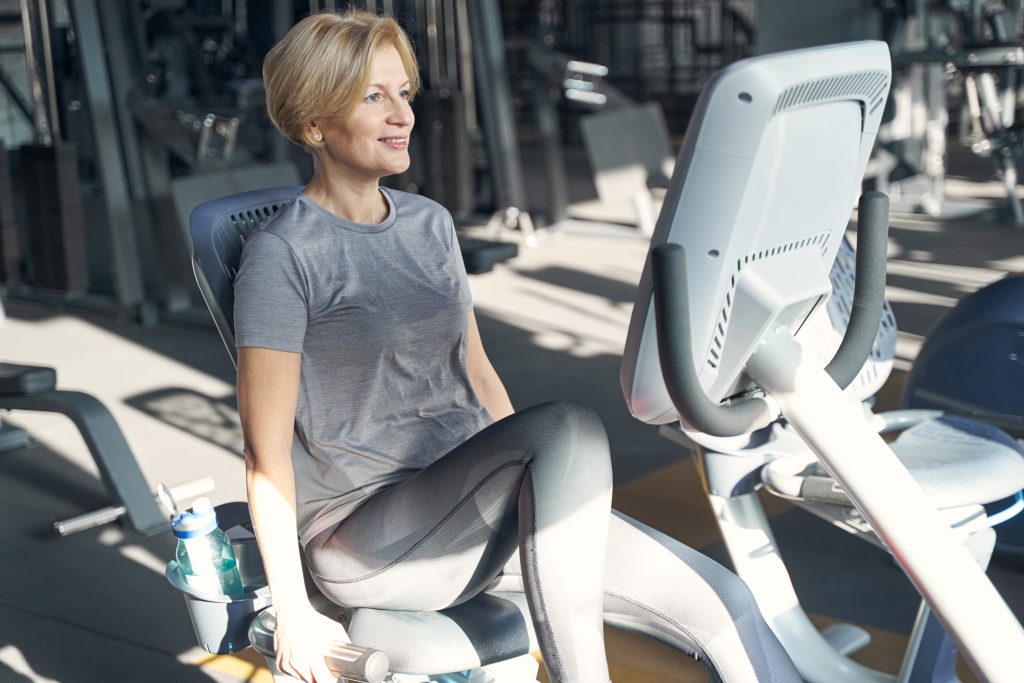
- Stationary cycling, including recumbent bikes for adults with balance concerns.
- Water-based exercise at a community pool.
- Resistance training with bands or light weights.
- Yoga, tai chi, or guided mobility work.
What Are the Best Indoor Exercises for Joint Health?
A 2025 analysis of 217 trials published in BMJ and summarized by Harvard Health found that lower-impact aerobic exercise, specifically walking, cycling, and swimming, is the most effective approach for easing knee osteoarthritis pain and improving function. The same principles apply to most adult joints, not just knees, and building the muscles around them helps absorb daily impact and shield cartilage from excess stress.
The most reliable winter options for adult joint health:
- Indoor walking. 20 to 30 minutes on a treadmill or a community track works the heart and lower body without snow or ice underfoot. If you’re used to walking outdoors, treadmill walking at a 1 to 2 percent incline approximates real terrain.
- Stationary or recumbent cycling. The pedaling motion moves the knees through their full arc without impact, and the seat supports your body weight to lower joint stress while improving leg strength. It’s a strong option for adults with arthritic knees or those recovering from a meniscus injury, which we cover in our blog on meniscus tear recovery timelines.
- Warm-water pool exercise. Indoor heated swimming is close to zero-gravity exercise, reducing pressure on weight-bearing joints while relaxing tense muscles, and water adds natural resistance. Many Connecticut YMCAs run senior water aerobics or arthritis-specific water classes.
- Yoga and tai chi. Both support joint longevity, improve flexibility, and can reduce stiffness while building strength in the deep stabilizing muscles that protect the spine, hips, and knees. Pilates is another useful indoor discipline for core strength, controlled movement, and structural alignment, and a stable trunk helps unload the lower back and improve balance.
- Resistance band work. 15 to 20 minutes, two to three days per week, can strengthen muscles safely indoors by targeting multiple muscle groups without heavy loading; seated leg extensions are one simple way to build muscle in the quadriceps without stressing the knee joint.
When conditions are safe, outdoor winter activities can also support overall fitness: ice skating gives you a solid cardio session, snowshoeing on snow covered trails is easier on joints than running on hard surfaces, and cross-country skiing works multiple muscle groups.
How Much Time Should Orthopedic Exercises for Winter Take Each Week?
The current CDC Physical Activity Guidelines recommend that adults get at least 150 minutes of moderate-intensity aerobic activity each week, plus muscle-strengthening activity on at least two days. That works out to 30 minutes, five days a week, and a balanced exercise routine for joint health should include strength training, mobility work, moderate aerobic activity, and balance control to improve stability and reduce the risk of falls.
For older adults 65 and up, the CDC adds a third type of work: balance practice, like heel-to-toe walking or standing up from a chair without using your hands. The plan should match your current fitness level, so start slowly and build as you can. Balance training cuts fall risk, which in a Connecticut winter is one of the most useful investments you can make.
A sample week for an adult new to indoor exercise:
- Monday: 30 minutes treadmill walk at a comfortable pace.
- Tuesday: 20 minutes resistance band routine plus 10 minutes of gentle yoga.
- Wednesday: Rest or a 15-minute mobility flow.
- Thursday: 30 minutes stationary cycling for moderate aerobic activity.
- Friday: 20 minutes resistance work plus balance practice (single-leg stands while brushing teeth count and can improve stability for icy winter workouts and daily life).
- Saturday: 30 to 45 minutes of walking, water exercise, or a yoga class.
- Sunday: Rest.
Which Indoor Exercises Should You Approach With Caution?
Not every indoor workout is automatically safe. Some create more risk than they’re worth for adults with joint concerns:
- High-intensity interval training with explosive jumps puts stress on the knees and ankles that arthritic joints rarely tolerate well.
- Deep squats or lunges below 90 degrees can aggravate knees and hips, particularly with prior injury.
- Heavy overhead pressing can strain the rotator cuff, especially in adults over 50.
- Long static holds like extended planks can spike low back pain in patients with disc issues.
If you’re returning to exercise after a long break, working with a physical therapist for the first few sessions sets a safer foundation than copying a video. Our physical therapy team at Valley Orthopaedic Specialists builds plans around individual joint history and current limits rather than a generic template.
How Do You Warm Up Properly When It’s Cold Inside?
Even with the heat running, most Connecticut homes feel cooler in January than the rest of the year. In cold weather, warming up matters more because muscles are more vulnerable to strains, and cold air can leave joints feeling stiffer before you start.
A safer warm-up sequence for winter exercise:
- Five minutes of light movement: start with a warm shower or gentle indoor marching, then use fluid movements like walking in place, arm circles, and leg swings rather than trying to stretch a cold muscle.
- Two or three minutes of dynamic stretches: controlled joint rotations and mobility moves such as hip circles, shoulder rolls, ankle pumps, and Cat-Cow help increase blood flow and distribute lubricating fluid across the joint surfaces.
- Skip static stretches at the start; save those for the end of the workout when muscles are warm, and dress in layers for outdoor winter workouts.
Small, continuous movements help keep extremity joints moving smoothly before exercise and support joint longevity during the winter months.
A heating pad on a sore knee or shoulder for 10 minutes before exercise lets the joint move with less stiffness. During winter workouts, drink water before, during, and after exercise, aiming for about eight 8-ounce glasses daily because cold air can still dehydrate you. Pair winter activity with attention to overall joint nutrition; our piece on the best foods for joint health covers what to eat in winter to support muscle and cartilage repair.
When Should You See an Orthopaedic Specialist for Exercise Pain?
Mild soreness for a day or two after starting a new routine is normal. Sharp pain, swelling, or persistent pain that lasts more than a few days is not and may need evaluation. Gentle daily range-of-motion exercises and stretching on sore days are usually fine, but stop if movement causes sharp pain. Schedule an evaluation if you notice:
- Joint pain that worsens with each workout instead of improving.
- Sudden swelling around a knee, hip, or shoulder.
- Locking, catching, or a giving-way sensation in the joint.
- Numbness or tingling during or after exercise.
- Pain that interrupts your sleep.
Older injuries can also resurface during a return to activity, and early imaging often shortens the path back to comfortable movement. Don’t wait until February to call about pain that started in early January, especially if you need orthopedic care because pain continues or function declines.
Connecticut Orthopedic Tips for Staying Active With Valley Orthopaedic Specialists
Winter doesn’t have to mean three months on the couch. The right orthopedic exercises for winter support winter wellness by protecting your joints while improving overall well-being and well being. regular physical activity helps you stay active through the colder months, support a healthy weight, and maintain an active lifestyle with options like indoor workouts.
The team at Valley Orthopaedic Specialists supports patients across Shelton, Oxford, and Fairfield with physical therapy, sports medicine, and orthopaedic care built around your goals, not a generic template. If you’re returning to exercise after an injury or want a personalized indoor program that respects your joint history, contact our team to schedule an evaluation at the location closest to you for practical tips and orthopedic care that support winter wellness; for nutrition guidance, see our existing article on omega-3s from salmon, walnuts, and flaxseeds, which may help reduce inflammation and joint pain and may lower arthritis symptoms by 30%.