
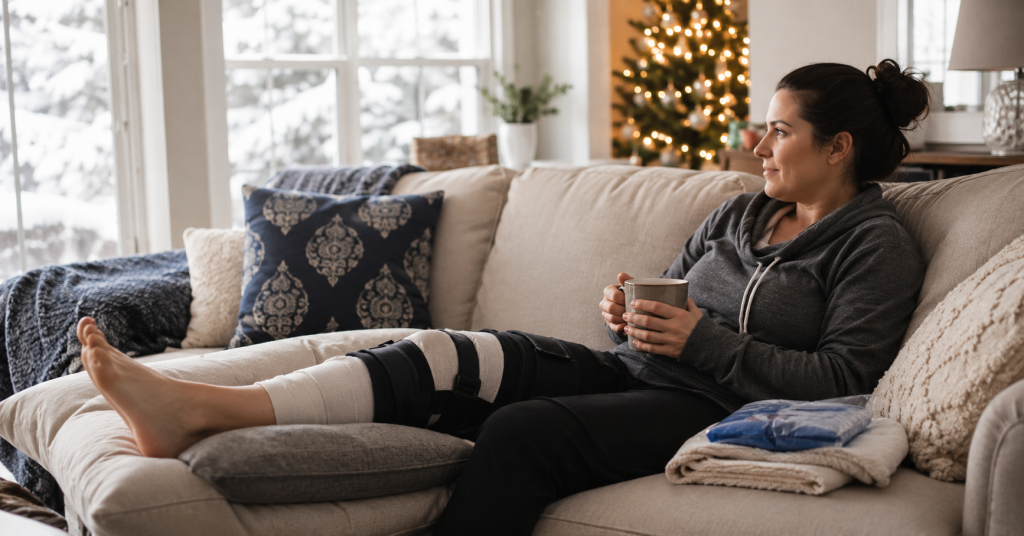
The holidays bring travel, late nights, family meals, and weather that rarely cooperates. None of that mixes easily with orthopedic surgery recovery. If you’re healing from a knee replacement, rotator cuff repair, or ankle reconstruction this December, you’re trying to rebuild your body during a season built for everyone else. The good news is that the holidays don’t have to set your recovery back. With some planning, this stretch can actually be a quieter, restful window to focus on healing. We’ve pulled together practical holiday recovery tips to keep your orthopedic surgery recovery on track without missing the parts of the season that matter most to you.
Why Does Orthopedic Surgery Recovery Feel Harder During Winter?
Recovery is rarely simple, but winter adds friction. Cooler temperatures can stiffen healing joints and make the first few weeks after a procedure feel slower, though they may also help reduce swelling. Connecticut’s December rhythm of snow, sleet, and freezing rain turns ordinary tasks like walking to the mailbox into real hazards when you’re on crutches or using a walker. The holiday calendar layers on more: visitors, errands, late nights, holiday parties, and the constant pull to do more than your body is ready for.
There’s also a sleep and pain component. Shorter daylight hours can disrupt the sleep patterns your body relies on to repair tissue, and keeping the bedroom cool while sticking to a fixed wake time can support deeper sleep and help anchor recovery during winter. Getting morning daylight within an hour of waking also helps reset your body clock. Cold weather can affect circulation while sometimes increasing pain perception around surgical sites or making inflammation feel more noticeable, and added stress can make the whole process feel harder. None of this means a December recovery is doomed. The good news is that the holiday season can also be a practical window to recover, with built-in downtime that supports the recovery process. It just means surgery recovery in winter looks different from recovery in May, and your plan should reflect that. During busy days, schedule micro-rests and take active breathing breaks to help lower cortisol and support recovery.
How Should You Prepare Your Home Before Surgery?
If your procedure is scheduled and you have time to plan ahead, use it. A few practical changes before surgery can save you weeks of frustration later. The goal is to make daily routines work without bending, reaching, or balancing on a healing limb.
Before surgery day, focus on:
- Setting up a recovery zone on the main floor with everything within arm’s reach: phone charger, medication, water, snacks, a blanket, and the TV remote.
- Clearing walking paths of rugs, cords, and clutter that could catch a crutch or walker.
- Stocking the freezer with simple meals for the first week so you’re not standing at the stove or relying on takeout every night.
- Salting walkways and steps before any predicted snow, or arranging for a family member to do it for you.
Plan hydration as carefully as meals: drink a full glass of water first thing in the morning, then aim for about eight glasses through the day, since hydration helps flush out toxins, reduce bloating, and boost energy after holiday indulgences.
The American Academy of Orthopaedic Surgeons publishes a patient guide to safe orthopaedic surgery that includes a similar pre-operative checklist, with details on what to bring, what to ask, and how to set up support at home.
What Should You Eat to Support the Orthopedic Healing Process?
Food does real work after surgery. Your body uses protein to rebuild tissue, vitamin C for collagen, calcium and vitamin D for bone, and zinc for wound repair. A 2021 review published through the National Library of Medicine found that adequate protein intake before and after orthopedic surgery reduces muscle atrophy and supports faster functional recovery, particularly in older patients.
Holiday meals don’t have to derail any of this. Eating smaller, frequent meals every 3 to 4 hours helps prevent blood sugar crashes, maintain a normal baseline metabolic rate, and achieve steadier energy without forcing you to eat differently from everyone at the table:
- Start each meal with a protein source: eggs at breakfast, turkey at dinner, Greek yogurt as an afternoon snack.
- Choose anti-inflammatory options when they’re on the table: nutrient-dense whole foods such as leafy greens, salmon, berries, walnuts, fruits, vegetables, lean proteins, and whole grains are essential for stabilizing energy, while bitter greens and fiber also support liver function and natural digestion.
- Go easy on alcohol. It thins the blood, dulls pain medication, and disrupts the sleep your orthopedic healing process depends on, and tapering off artificial stimulants can help prevent evening crashes.
- Drink water steadily through the day. Cold weather and indoor heating mask thirst more than most people realize.
For more on winter food choices that support musculoskeletal recovery, our team covers seasonal nutrition in our piece on the best foods for joint health.
How Do You Pace Yourself at Holiday Gatherings?
Family gatherings are where most recovery plans go sideways. The chairs are too low, conversations run long, and nobody wants to be the person who leaves at 8 p.m. But pushing through hours of sitting or standing usually means a swollen, painful joint the next morning. Instead, use gentle movement breaks rather than staying still for hours.
A few strategies that work in real homes:
- Bring an elevation pillow or ottoman. A propped leg or arm reduces swelling without making you stand out.
- Set a quiet timer on your phone to ice every two hours.
- Take pain medication on schedule rather than waiting for pain to spike. Staying ahead of it is the goal.
- Plan an exit time before you arrive and stick to it. Recovery comes before politeness.
Aiming for a 15-minute daily short walk can help oxygenate your blood and reduce stress hormones, and you can build toward 30 minutes of low-intensity steady-state activity each day to improve circulation, lift your mood, and kickstart your metabolism without overloading recovery. Easing back into fitness with gentle movement helps digestion, and even a short walk is a better choice than jumping into intense workouts that shock your system.
If swelling worsens, the joint feels hot to the touch, or pain stops responding to medication, contact your surgeon’s office. After certain procedures, like knee or hip replacement, a sudden change in swelling can point to issues that need an evaluation, not just rest. Our total joint replacement page outlines what to expect in the first weeks after these procedures.
What Warning Signs Shouldn’t You Ignore?
Most surgical complications are uncommon, but recognizing them early matters, particularly during a season when patients tend to wait too long to call.
The first concern is surgical site infection. Signs include increasing redness or warmth around the incision, drainage with an unusual color or odor, and fever. Mayo Clinic guidance on monitoring wounds notes that expanding redness, increasing pain, drainage, warmth, or swelling all warrant a call to a healthcare professional.
The second is deep vein thrombosis. After hip or knee surgery, the risk of a blood clot rises, and long car rides or flights during the holidays add to that risk. Watch for sudden calf or thigh pain, swelling in one leg, warmth, or skin that looks red or discolored on one side only.
Don’t wait until after the holiday weekend to call. Most surgeons would rather hear from you on Christmas morning than treat a serious complication on December 27.
Why You Shouldn’t Skip Physical Therapy in December
Physical therapy is usually the first thing patients try to push off when the calendar gets crowded. It’s also the worst thing to skip. Range of motion gained in early rehab is fragile, and missing two weeks can mean starting over on flexibility. Stiffness sets in faster than most patients expect.
If you’re traveling, ask your physical therapist for a printed home program before you go. If you’re hosting, schedule sessions for early morning before guests arrive. Our therapists work with patients on holiday-adjusted schedules so progress doesn’t stall. The same approach matters after soft tissue procedures; you can read more in our piece on meniscus tear recovery timelines.
How Long Does Surgery Recovery in Winter Actually Take?
Recovery timelines depend on the procedure, your age, and how closely you follow your post-op plan, and recovery time varies for the same reasons. Most patients see real progress in the first 6 to 12 weeks. Joint replacements often take 3 to 6 months for a full return to activity. Soft tissue procedures like rotator cuff repair can run 4 to 6 months. Surgery recovery in winter doesn’t extend these timelines on its own. Missed PT, rushed activity, and ignored warning signs do, though holiday downtime can make recovery time easier to manage without shortening the timeline itself.
Continuing Your Orthopedic Surgery Recovery With Valley Orthopaedic Specialists
If you’re planning a procedure for early winter or already in recovery, many patients see the winter months as a practical, even perfect time to schedule surgery because healing is easier to manage discreetly, and inclement weather naturally keeps many people indoors, making it easier to rest and stay consistent with recovery instructions. Dressing in layers can also hide bandages or compression garments during recovery. For those considering plastic surgery, winter surgery can be especially appealing, and some facial procedures or breast surgery may feel easier to recover from privately.
Our orthopaedic surgeons, physical therapists, and pain management specialists work together to keep your orthopedic surgery recovery on track through December and beyond without bulky clothing that can increase discomfort.
With offices in Shelton, Oxford, and Fairfield, plus OrthoDirect orthopaedic urgent care for sudden concerns, we make it easier to get the care you need without putting your life on hold. Shorter days and colder weather can also reduce uv exposure and uv rays, which may support scar healing after surgical procedures. Contact our team to schedule a consultation or follow-up appointment.